
The Meanest Fish in the Tank
I recently read an article about a fish and it fascinated me. The article came through an email blast I subscribe to.
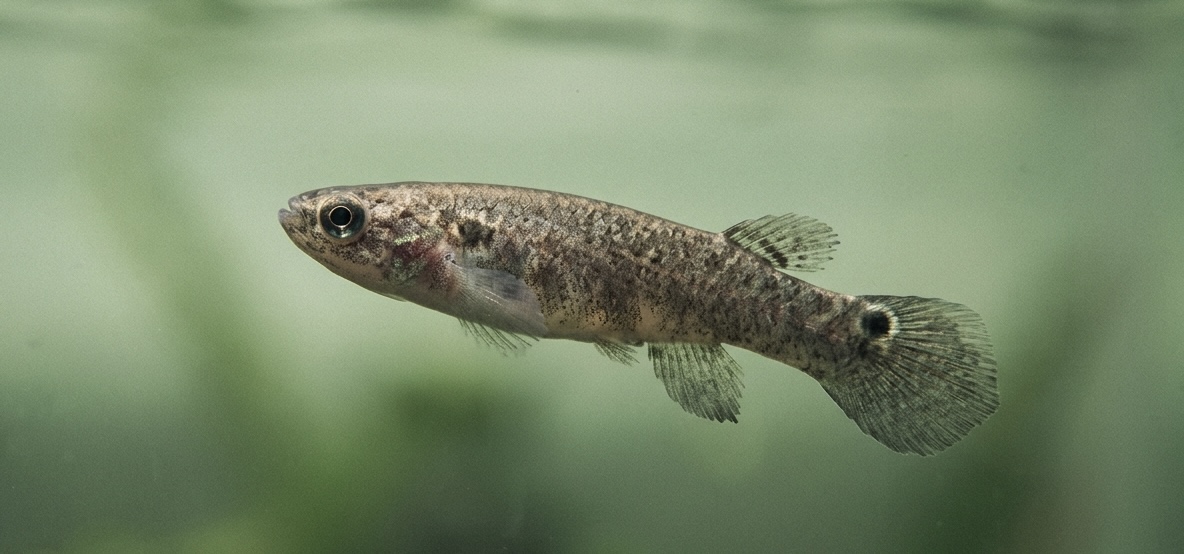
The fish was the mangrove rivulus, Kryptolebias marmoratus, a finger-sized creature from the brackish swamps of the Americas — and one of the most belligerent vertebrates known to laboratory science. Drop two of them in the same tank and you get a guaranteed cage match, no glove-touching niceties before the main event. The fish is also a self-fertilising hermaphrodite, which means every offspring is a genetic clone of the parent. In a lab, that solves a problem before the experiment begins: every fish is identical to every other, so when one behaves differently, the genes can't be the explanation.
A researcher in Nova Scotia named Dayna Forsyth, working with her supervising scientist Suzie Currie, dropped a low dose of psilocybin into the water of one such tank. The fish, instead of attacking the other fish in the tank, became aware but unbothered. Less aggressive. More socially relaxed. Their paper, published in Frontiers in Behavioral Neuroscience the day before yesterday, calls the result the first evidence in a vertebrate that the molecule can dial down escalated aggression without dialling down the social engagement underneath it.
I finished reading and started thinking about how a finding like this might be useful. The first place my mind went was the obvious one: the belligerent humans we all deal with. The cage-fighter fish does in a tank what we sometimes wish we could do at the office, at the family dinner, at the bus stop. If only we could invent a spray or soap to pacify the aggressive human brutes we all deal with often.
The second place my mind went turned out to be more inspiring to my curiosity and became the inspiration for this article. The fish story reminded me of two dogs I grew up with in Zambia: Mulli and Cindy.
They were small Pekingese-Pomeranian crosses who spent most of their lives in the courtyard at the centre of our house. On special occasions we let them out into the wider garden to run around. Close to the house grew a tree called the mpundu. The fruit of the mpundu is used by people to make a strong alcoholic, hallucinatory drink, colloquially known as Seven Days — for the long stretch of time it leaves the drinker affected. The effect comes from fermenting the fruit. We learned that fallen mpundu fruit, left long enough on the ground, ferments naturally and produces the same effect — and we learned it by watching the dogs after they inexplicably started eating it. They turned into drunken idiots — the canine version of the people I had seen drink Seven Days.
They loved it. When the season was right and the dogs and the fallen fruit were out in the garden at the same time, Mulli and Cindy would eat their hearts out like sailors ordering shots at landfall. And then, like drinking sailors, they would lose their balance and, in the most general sense, lose all their dignity. They came back the next season. They came back the season after that. The indignity, whatever it was, was clearly worth it to them.
That is the connection I decided to research and write about. Is this a pattern across other animals? Do living creatures, broadly, have a desire to be effed up? It turns out the answer may be more emphatic than most of us realise. Let's test that hypothesis against the evidence.
An anxious kingdom
There is a long-running joke among ethologists that the only animal that doesn't seek altered states is the one that hasn't been observed long enough.
Siberia in winter is mostly dark and mostly cold, and the animals that live there have a hard time of it. Reindeer have spent the last forty thousand years adapting to one of the most punishing climates on the planet. Their hooves widen in summer for the soft tundra and contract in winter for the ice. Their nasal passages have a heat-exchange system that lets them breathe air at minus forty degrees without freezing their lungs. Their eyes shift colour with the season — gold in summer, deep blue in the long polar dark — to let them see in light human eyes cannot use. None of this comes free. A reindeer's life is foraging, calving, migration, and not freezing.
Out in the snow, in the late summer and early autumn, the reindeer find Amanita muscaria — the iconic red mushroom with the white spots that children draw and Mario jumps on. They dig the mushrooms out from under the moss and eat them, and afterwards they wobble. They lose track of the herd. They stand in fields and stare at nothing for hours, like their minds reverted all the way back to their doe-eyed infancy. The herders who have lived alongside them for centuries say the reindeer go looking for the mushrooms on purpose. There is no good reason to disbelieve the herders. They have watched the reindeer for longer than any laboratory has existed.
Amanita muscaria in a human is not like alcohol and not like the psychedelics most people think of. The active compounds — ibotenic acid and muscimol — produce something between a sedative and a strange dream. The body goes loose. Time slows. The world becomes a little absurd, sounds become interesting, and the user gets a few hours of feeling far from where they started. The dose is the whole game. Get it right and it is a long woozy afternoon. Get it wrong and it is a long bad night. The margin is narrow.
The Koryak people of the Russian Far East worked out a way around the dose problem about a thousand years ago. The active compounds in Amanita pass through the reindeer's body largely unchanged and come out in the urine. The urine is milder than the raw mushroom — the toxic compounds have been partially broken down, the dose is more predictable. So the Koryak drank the urine. They drank the reindeer's, and on long nights they drank each other's, and the substance could be passed around a circle for hours, getting gentler each time it moved.
The reindeer found that eating the mushrooms produced a state they wanted to repeat. Maybe it makes them mellow. Maybe it gives them a few hours of relief from a harsh subarctic life. Maybe it removes the fear that any prey animal carries with it constantly. Whatever the reason, they found it appealing enough to keep coming back. The Koryak learned the mind-altering qualities of the mushroom and experienced them in their own way. No one can say whether the effect is the same for a reindeer and a human. But no one can reasonably deny that the effect is mind-altering for both, and that the altered state is appealing enough that both animals want to find their way back to it.

The list goes on, and once you start it, it is hard to stop.
Cats and nepetalactone. Catnip is in the mint family, and the molecule it produces hits a specific olfactory receptor in domestic cats that produces what behavioural ecologists carefully describe as prosocial euphoria and what cat owners describe by recording videos of their cat hugging a sock. About thirty per cent of cats lack the relevant receptor variant and don't respond. The other seventy per cent will, given the chance, find the catnip again. There is no dignified way to describe what they look like during. They are catnip-drunk and very pleased about it.
Tasmania, by some quiet historical accident, is the world's largest licit producer of opium poppies. Most of the codeine and morphine in your medicine cabinet was grown there. The fields are vast, regulated, and patrolled. The fields are also full of wallabies every poppy season.
Wallabies are normally a tense little animal. They are prey for everything bigger than they are, which in Tasmania is most things. A wallaby in an open field is constantly checking — ears swivelling for sound, head up between bites, ready to bolt. They graze in short bursts and they don't stay still. The default setting of a wallaby is mild anxiety with a side order of escape plan.
Now drop a wallaby into a poppy field. The poppies are full of the same alkaloids that go into morphine — the molecules the human medical system uses to take pain away. The wallaby eats. About twenty minutes later the wallaby stops checking. The ears stop swivelling. The head goes down and stays down. The wallaby starts hopping in slow precise circles in the crop, around and around, and then lies down for a while. There is footage of this. Tasmanian farmers have walked out at dawn to find perfect rings traced through their fields where a wallaby spent the previous evening forgetting it was prey, lost in mindless bliss.
If you have ever taken a strong opioid for a serious injury — after surgery, say, or a broken bone — you know what the wallaby is feeling. The body becomes warm and heavy. The pain is still there but it is happening to someone else now. The future stops mattering for a few hours. The thing about morphine is not that it makes you happy. It is that it makes you stop caring whether you are happy. For a creature whose entire nervous system is tuned for "what is going to eat me next," that must feel like a holiday.
The wallabies worked out what poppies do to a body the same way humans did, on their own. They just let humans solve the supply problem for them.
Bighorn sheep climb cliffs that have killed members of their flock in order to reach a narcotic lichen they cannot find at lower elevations. They scrape it off the rock with their teeth, in places where one slip is the end. They keep coming back. The risk-reward calculation, in any mathematical sense, is terrible. They do it anyway. Whatever the lichen does to them, they cannot quit it.
Capuchin monkeys in South America have a habit, observed in multiple troops independently, of catching millipedes, biting them gently to release the benzoquinones the millipedes secrete defensively, and then rubbing the secretion all over their fur. The benzoquinones are insect repellent. They are also, at the doses involved, mildly intoxicating. The monkeys often appear, after a thorough rub, to be having a peaceful afternoon. They share the millipedes. They pass them around the troop. Animal behaviourists are reluctant to say that the social character of the activity is part of the point. They will say, carefully, that the activity is highly social, and leave the conclusion to the reader. The capuchin troop, on a millipede afternoon, looks like nothing so much as a group of friends who have agreed, just for an hour or two, to drop the rank politics and be nice to each other.
Dolphins are some of the most socially intelligent animals on the planet. They live in pods of ten to fifty, recognise each other by signature whistles that function the way human names do, cooperate on hunts, teach their young, mourn their dead, and play. Play is the part we tend to skip past. Dolphins play more than almost any other species in the ocean. They surf the bow waves of boats for fun. They throw seaweed back and forth. They blow rings of bubbles and chase the rings through the water. The brain of a bottlenose dolphin is one of the most neurally complex on earth. They are using all of it.
They are also under pressure all the time. A pod is a constant set of negotiations — who eats first, who follows whom, who is allied with whom this week, which males are moving toward which females, which calf is whose to watch. The ocean is loud with predators and competitors. Dolphins sleep with one half of their brain at a time so the other half can keep watching for sharks. There is no version of a dolphin's life where the dolphin is fully off-duty. The default state of a dolphin's mind, even at rest, is alert.
Then there is the pufferfish. A pufferfish, when threatened, secretes tetrodotoxin — one of the most potent neurotoxins known to biology. A few milligrams will kill a human. Tetrodotoxin works by blocking sodium channels in nerve cells, which is the mechanism nerves use to send signals. At a high enough dose, the nerves stop firing. The diaphragm stops, the heart stops, and the body shuts down without the person ever losing consciousness, which is the part that makes tetrodotoxin one of the more horrible ways to die. This is the same toxin that makes Japanese fugu fatal at chef-error doses. Sushi chefs train for years to learn how to remove it.
A young dolphin in the Indian Ocean, on an uneventful afternoon — perhaps in a stretch of ocean the pod considers safe, perhaps when there is nothing else demanding their attention — will sometimes find a pufferfish, take it gently in its mouth, and squeeze. The pufferfish, alarmed, releases a small dose of toxin. The dolphin holds the puffer for a few seconds, lets the toxin diffuse into the water around its mouth, and then passes the puffer to another dolphin in the pod. The second dolphin does the same. The puffer gets passed around the pod for an hour, sometimes longer, gentle squeeze after gentle squeeze. The pufferfish almost always survives. The dolphins, by the end, are doing something the BBC film crew that documented this in 2014 described as floating just below the surface in an apparent trance, hanging vertically with their snouts pointing up, eyes fixed on their own reflections in the water above, briefly forgetting they have a body.
The dose matters more here than in any other story in this piece. A small amount of tetrodotoxin in a vertebrate body produces a tingling, a numbness, a slowing of the nerves that makes the body feel pleasantly distant. A large amount kills. The dolphins, somehow, have worked out the small amount. They squeeze the puffer just hard enough to release a microdose. They do not bite the puffer or kill it, which would release the lethal load. The whole behaviour is built around precision. If a dolphin gets the dose wrong, it dies. The fact that we keep finding pods of healthy adult dolphins doing this means that the pods that do it have learned how to do it without the casualties.
What is the dolphin feeling, in the hour after the puffer has been passed around? The honest answer is we do not know. But we can make a reasonable guess from what tetrodotoxin does to a human nervous system at low doses. The body becomes lighter. Sensation softens. The pressure of being constantly alert eases for a while. For a creature whose brain has spent every minute of its life monitoring shark presence, food availability, social politics, and respiratory cycles, a few hours of softened nerves and lifted weight must be something close to a holiday. The dolphins, at the end of these sessions, look — and there is no way to say this without anthropomorphising a little, but the BBC footage really does show this — like animals having a profoundly good time.
Most adults know what it feels like to come home from an overwhelming day or week, sit down on a couch, take the first sip of a strong drink or smoke a joint to take the edge off. Most of us can happily relive the stress relief that we feel in that mental climb down from over focusing on stressful thoughts. The attraction is not necessarily the drink or weed, it is the nervous system getting permission to put the responsibility and pressure out of focus for a break. It is like a child being let out for recess. The dolphin pod, floating vertical with their snouts pointing up, is doing the dolphin version of that mental break. They have spent almost every hour of every day of their lives watching for sharks. The puffer gives them an hour where the overwhelming responsibility is allowed to be put on hold.
The risk is the part that makes the dolphin story uncomfortable. Tetrodotoxin is not a forgiving substance. The window between the dose that produces the pleasant numbness and the dose that produces respiratory failure is narrow — narrower than morphine's, narrower than alcohol's, narrower than almost any substance humans use recreationally. The dolphins are playing on a knife-edge. We do not know how many young dolphins die learning the technique. We do not know how often a pod loses a member to a puffer that was squeezed too hard. We only see the pods that have got good at it.
The lesson sitting underneath the dolphin story is the same lesson that will return at the end of this piece, when humans start doing the same thing with synthetic opioids. Some substances numb the watcher in a way the body desperately wants. Some of those substances also sit close enough to the lethal dose that getting it wrong is not a hangover, it is a funeral. The dolphins know how to handle their puffers because the pods that did not are not around to be filmed. Humans, with fentanyl on the street, are still in the early part of the same learning curve. The reach is the same. The margin for error is the difference between being a dolphin pod that has worked it out for ten thousand years and a population that has had cheap synthetic opioids for thirty.
Jaguars in the western Amazon eat the bark of the Banisteriopsis caapi vine. B. caapi is the woody component of ayahuasca, the brew that has been a sacrament for indigenous Amazonian peoples for centuries. The jaguars roll, dilate their pupils, and are quiet for hours, lost in some big-cat dream. Lifelike reincarnations of Fritz The Cat. The local human story, told and retold in the upper Amazon, is that humans first learned about the vine by watching the cats. There is no way to verify the etymology of a sacrament. There is also no obvious reason to disbelieve it.
There is one experiment that breaks the pattern of recorded-but-uncontrolled animal behaviour into something closer to a rigorous result, and it deserves its own paragraph. In 2018, a Johns Hopkins neuroscientist named Gül Dölen — now at UC Berkeley — put California two-spot octopuses in tanks of seawater laced with low-dose MDMA. Octopuses are antisocial creatures. Drop two of them in the same tank without the drug and they will avoid each other, attack each other, or both. With the MDMA dissolved in the water and absorbed through the gills, the octopuses became, in Dölen's careful description, prosocial. They reached out. They draped themselves over the cages of the other octopuses they had been ignoring or attacking minutes before. They tended to hug the cage, Dölen reported, and put their mouth parts on it. The love drug makes the octopus resemble a horny teenager on prom night but gifted with eight agile legs instead of two awkward hands. The octopus and the human are separated by five hundred million years of evolution, and yet the molecule worked the same way on both. The receptor is older than the divergence. The reach for the company of the other animal, in the chemical state that the molecule produces, is older than the brains that have it.
The pattern in this tour is not that animals are addicts. They are not. The wallaby that ate the poppy yesterday is not, in any rigorous sense, in withdrawal today. The reindeer doesn't relapse. The use is occasional, embedded in seasons and contexts, modulated by the constraints of an animal that still has to find food and escape predators and not freeze. What the pattern shows is that the want is older than us. The desire to be temporarily other, briefly elsewhere, momentarily released from the default state of being whatever creature you are — that is not a uniquely human pathology. It is a property of being a sufficiently complicated animal in a difficult world.
Which raises the question of what humans have done with the same impulse. The answer, mostly, is that we have ritualised it.
The long inheritance
For most of human history, in most places where humans have lived, the use of substances that alter consciousness has been a deliberate, regulated, communal act. The substance was not a recreational option. It was a sacrament. The setting was not a private apartment. It was a temple, a shrine, a circle of elders, a forest clearing where the names of the absent dead were spoken aloud. The dose was not the user's call. It was a priest's, or a curandera's, or a shaman's, and the priest had spent years learning how the dose interacted with the body, the mind, the room.
The Greeks did this for two thousand years at Eleusis, twenty kilometres west of Athens. The Eleusinian Mysteries were the most prestigious religious initiation in the ancient Mediterranean. Plato attended. Aristotle attended. Marcus Aurelius attended. Cicero said that of all the gifts Athens had given the world, none was greater than the Mysteries, because the Mysteries taught the initiates how to live with joy and how to die without fear. The initiates walked the Sacred Way for nine days, fasting. They reached the sanctuary. They drank a barley beer called the kykeon. The formula, recovered from the surviving Homeric Hymn to Demeter, is a ritual phrase the initiates were apparently required to say before drinking: I have fasted, I have drunk the kykeon. What happened after, every initiate was sworn never to disclose, and almost none did. We have hints. We have testimonies that what occurred inside the sanctuary at Eleusis was a vision of the structure of life and death so powerful that the initiates emerged different.

For two and a half thousand years the question of what was actually in the kykeon was an open one. The answer that increasingly looks correct is the one that R. Gordon Wasson, the American mycologist, Albert Hofmann, the Swiss chemist who synthesised LSD, and Carl Ruck, the American classicist who coined the word entheogen, proposed in 1978 in a book called The Road to Eleusis. The kykeon, they argued, contained ergot — the fungus Claviceps purpurea, which infects barley and produces alkaloids closely related to LSD. In 2023, archaeologists in northeastern Spain found ergot in the dental calculus of a man buried at a sanctuary devoted to the Eleusinian goddesses, and in residue inside a ceremonial vase at the same site. In February of this year, a team writing in Scientific Reports showed that the chemistry of converting raw ergot into a drinkable psychoactive form using the materials and methods available to ancient priestesses was straightforward — the priestesses would have had to know what they were doing, but they would not have had to know more chemistry than was already lying around the kitchen of any temple. The hypothesis is increasingly hard to argue with. The Greeks, for two and a half millennia, ran an LSD ceremony for the philosophical and political elite of the Mediterranean, and Plato wrote his philosophy after coming home from one.
The Vedic peoples of the Indus valley, around the same period, drank a substance called soma. The Rig Veda, the oldest of the Hindu scriptures, contains 114 hymns to soma. The hymns describe the substance with the directness of people who have actually drunk it: it makes the worshipper see the gods, it makes the worshipper feel deathless, it produces light in the head. What soma actually was, by the time anyone tried to write it down outside the hymns, had been forgotten. The candidates that scholars have proposed include Amanita muscaria — Wasson's later argument, in his 1968 book Soma — Syrian rue, ephedra, and a combination of the above. We will probably not know. What we know is that the most consequential set of religious texts in the South Asian world is, in significant part, written by people on a substance, about a substance, for the use of communities still trying to encounter the substance.
The Mexican highlands have an unbroken tradition that stretches from before the Aztec empire into the present day. The Aztecs called the small psilocybin mushrooms teonanácatl, the flesh of the gods. The Spanish, after 1521, suppressed the practice with the seriousness the Spanish reserved for what they took to be devil-worship, and the practice went underground. It survived in the mountains of Oaxaca. In 1955, a Mazatec curandera named María Sabina took part in a ceremony with R. Gordon Wasson and his wife Valentina, the first non-indigenous people to do so in living memory. Wasson published the experience in Life magazine in 1957. The article landed like a thrown stone in a still pool. María Sabina spent the rest of her life dealing with the consequences — the pilgrims, the disruption of her village, eventually a falling-out with the elders who held that the sacrament had been compromised by being shown to outsiders. She died in 1985, having continued to lead ceremonies, and having said, with the directness of someone who saw clearly what she had done and what it had cost: that the sacrament was no longer what it had been before the foreigners came. She did not regret showing the Wassons. She regretted that the rest of the world had followed.
In Gabon, in central Africa, the Bwiti tradition uses iboga — the root bark of Tabernanthe iboga — as the central sacrament of an initiatory religion that has its own theology and its own version of the thousand-year-old human practice of taking a heroic dose under supervision in order to encounter, at the limit, the structure of one's own life. Bwiti initiations involve doses of iboga that take the initiate to the edge of physical safety. People die in Bwiti ceremonies. They die rarely, but they die. The community accepts the risk because the alternative — to never have the encounter — is, by the lights of the tradition, a worse fate than to have the encounter and not survive. The tradition is as carefully held as any practice of stewardship anywhere on earth. It is held by people who, by the standards of the modern industrialised world, possess almost nothing. The thing they possess is a careful technology of altered consciousness that was old when Plato was young.
The Native American Church, formally founded in the early twentieth century but rooted in older Comanche and Kiowa peyote ceremonies, holds peyote services across the American West and into Canada. Peyote contains mescaline. The ceremonies are all-night, communal, prayer-led, and protected as a religious practice under specific exemptions to the controlled substances laws of the United States and Canada. The participants are not, in the legal or moral sense, recreational users. They are members of a continuous community of practice that has, for generations, used the substance as a vehicle for prayer.
The list lengthens if you keep going. Sufi orders in Anatolia and Persia made disputed use of cannabis. The maenads of Dionysian ritual, in the Greek world, may have used a fermented wine that included additional psychoactive plants. The early Christian Eucharist sat in a Mediterranean ritual landscape where the line between the sacred meal and the entheogenic sacrament was not as bright as the church later wanted it to be. Modern scholars argue about how much of what looks, in retrospect, like ritualised drug use was actually something else — fasting, sensory deprivation, exhaustion, group-induced trance — and the truth is probably that most cultures used a combination, and that the substance, where one was used, was embedded in the rest.
What disappears, in the modern industrialised world's relationship to these substances, is the embedding. The chemistry survives. The temple does not. The dose is taken, in most cases, in private, by an individual, with no priest, no community, no expectation of return, and no ritualised closing of the experience. Whether this matters is one of the central questions the science of the next decade is going to have to answer. There is a reason the people running the most rigorous psychedelic-therapy trials build their protocols around exactly the elements the ancient world built its rituals around: the prepared room, the trained guide, the fast, the careful integration afterward. They are not reinventing the practice. They are recovering it.
Philosophers, with a foot in two worlds
The history of Western philosophy has a quiet sub-history that the official history mostly does not include. It is the history of philosophers who took substances, wrote about it, and let what they encountered shape their work.
It does not start with William James, but it gathers force with him.
James was a member of one of the strangest American families of the nineteenth century. His father, Henry James Sr., was a Swedenborgian theologian of independent means who took his children on grand tours and put them in and out of European schools to develop their souls. His brother Henry Jr. became the novelist. His sister Alice became a diarist whose private chronicle of her chronic illness is one of the great records of consciousness in pain. William was the eldest. He trained as a doctor, a chemist, a painter, and finally as a psychologist. He took a position at Harvard in 1873 and held one variation of it for the next thirty-five years. He had also, since his late twenties, suffered from a depression severe enough that he wrote in his journal about whether to continue living, and decided, in a famous private moment, that he would treat his decision to continue as itself an act of faith — he would believe in his own free will because believing in it might be the thing that saved him.
In 1882, James read a pamphlet by an upstate New York mystic named Benjamin Paul Blood, who had got high on nitrous oxide at the dentist's office and decided that the experience contained the key to philosophy. Blood's pamphlet was called The Anaesthetic Revelation and the Gist of Philosophy. James, characteristically, decided to find out for himself. He inhaled the gas in his rooms in Cambridge, Massachusetts. He inhaled it more than once. He wrote about the experience that same year, in an essay in Mind called On Some Hegelisms, and again later in The Varieties of Religious Experience.
What James found, under the gas, was a sense of overwhelming reconciliation. The contradictions he had been arguing about as a philosopher dissolved. The line between himself and the things outside himself softened. The conviction, while it lasted, was that truth lies open to the view in depth beneath depth — that philosophy, in its normal sober condition, was a person trying to read the foundation of a building by examining the wallpaper. The conviction did not survive the gas wearing off. The notes James scribbled to himself while high read, sober, like the babbling of a man who had momentarily lost the use of his mind. But the sense of having been somewhere, of having seen the building, persisted. James did not decide, as a sceptic might have, that the sense was illusory. He decided that it was data — data about the topology of consciousness, data about the existence of states our normal waking minds could not reach without help. Our normal waking consciousness, he concluded, was but one special type of consciousness, and other forms lay parted from it by the filmiest of screens. The molecule had shown him the screen.
The Varieties of Religious Experience, which James gave as the Gifford Lectures in 1901–1902 and published in 1902, is one of the most important books in the history of the philosophy of religion. It would not exist, in the form it exists, without the gas. James was a depressive who had glimpsed, while breathing nitrous oxide in 1882, that there was somewhere else to be than the bottom of his own depression. He spent the next twenty years arguing that the somewhere else was real, was philosophically respectable, and was something philosophy had no right to ignore.

Walter Benjamin in Marseille
Walter Benjamin was a German Jewish writer who, between roughly 1924 and his suicide in 1940, produced some of the most original prose written in any European language in the twentieth century. He never held a permanent academic post. He was financially supported, sporadically, by his friend Theodor Adorno and the Frankfurt School. He was separated from his wife. He saw his son rarely. He moved between Berlin, Paris, Capri, and a variety of cheap hotels and borrowed apartments, writing his enormous unfinished study of nineteenth-century Paris — The Arcades Project — and short essays for whatever journal would take them.
In the late 1920s and into the 1930s, Benjamin took hashish on a number of carefully recorded occasions. The records are collected in a notebook he labelled the Hashish Protocols. He took the drug with friends, in their apartments, often with one of them as the sober observer. The protocols are not the testimonies of a recreational user. They are the field notes of a man trying to find out what happens to perception, attention, and the experience of meaning when the ordinary working of the mind is loosened.
What the protocols show is a writer who, under hashish, became unusually attentive to the texture of small things. The streetlamps of Marseille belonged to him for the duration of an evening. The sound of a bell unfolded in slow motion as it decayed. Faces, in the cafés, became readable in a way they had not been before. He wrote one of his most beautiful short essays, Hashish in Marseille, out of one of these evenings. The essay is not about being high. It is about how the city, on that one evening, came briefly into focus.
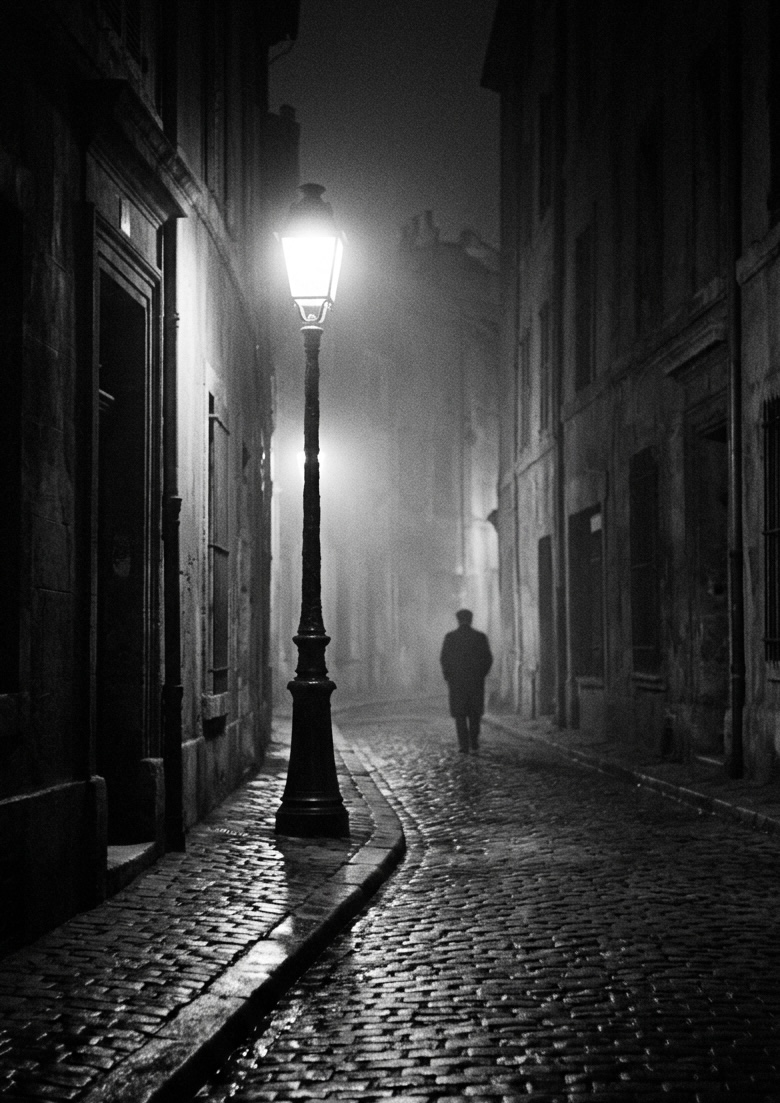
Benjamin was a man under tremendous pressure. He was running, during the years of the protocols, from the German fascism that would, in 1940, kill him at the Catalan border, when he took an overdose of morphine in a hotel in Portbou rather than be turned over to the Gestapo. He was also a man for whom most of the ordinary supports of a settled life — money, a permanent home, family proximity, professional standing — had failed. The hashish gave him a few hours, several times a year, when the city itself became kind to him. The protocols suggest he understood what the substance was doing for him. He did not romanticise it. He did not depend on it. He used it as a window, a few times, into a relationship with the world that the ordinary working of his mind could not, on its own, sustain.
He killed himself at forty-eight. The hashish had not saved him. But for a few hours at a time, in the years before, it had been on his side.
The mescaline garden
Aldous Huxley first took mescaline on a May morning in 1953, in the garden of his house in the hills above Los Angeles. He was fifty-eight. He had been nearly blind since adolescence, the result of a corneal infection that had left him reading with a magnifying glass for most of his adult life. The doctor on hand for the mescaline experiment was a young Canadian psychiatrist named Humphry Osmond — the man who would, two years later, coin the word psychedelic in a letter to Huxley, after the two of them had spent some time trying to find a less laden term than the alternatives on offer.
What happened to Huxley in his garden became the book The Doors of Perception, published in 1954. The book is, despite its reputation, mostly about flowers. The mescaline gave Huxley a few hours of what he described as seeing, in the strong sense — a chair was a chair as a chair actually was, an iris was an iris, the folds in his trousers were a landscape in their own right. The book is a careful piece of writing by a man who had spent his life thinking about religion, mysticism, perception, and the moral life of the rich Western intellectual, and who suddenly had access, for an afternoon, to the kind of perception he had only previously been able to read about in mystical literature.

Huxley spent the rest of his life working through what the encounter had given him. He took mescaline again, sparingly. He took LSD, sparingly. He wrote a sequel — Heaven and Hell, in 1956 — that was tougher, more aware of the dark side of the same encounter. He died of cancer in November 1963, on the same day John F. Kennedy was assassinated, which is the reason most Americans alive in 1963 do not remember that Huxley died that day. On his deathbed, lucid, he asked his wife Laura to inject him with LSD. She did. He died a few hours later. It is not a recommendation. It is not a moral. It is the death scene of a writer who had spent ten years thinking about what altered consciousness was good for, and had decided that one of the things it was good for was being awake at the end.
Foucault at Zabriskie Point
In the spring of 1975, Michel Foucault — already the most influential French philosopher of his generation, lecturing at the Collège de France, mid-way through The History of Sexuality — flew to California for a visit organised by a young academic named Simeon Wade, who was teaching at Claremont. Wade and his partner Michael Stoneman drove Foucault out to Death Valley. At Zabriskie Point, near sundown, they gave him LSD.
Foucault had not, until that night, taken a major psychedelic. He came down hours later sitting on the ground, watching the sky, and weeping.
He returned to Paris a different writer. The volumes of The History of Sexuality that he produced in the years afterward — particularly the second and third — are visibly different in shape from what he had been writing before. The work becomes more interested in techniques of the self, in the ancient practice of care of the self, in what an ethics of existence would look like if you had, in fact, looked at the categories you were working inside and seen that they were not the only categories. Foucault wrote to Wade afterwards. Wade kept the letters. Wade also, decades later, published a small book called Foucault in California about that night, in which Foucault was reported to have said something close to: the experience changed my life. We have only Wade's account. Wade was in love with Foucault, and the account has the protective glow of a chronicler who saw what he wanted to see. But the books that Foucault wrote after Death Valley are real, are visibly different from the books before, and were written by a man who had, in the desert of California in his fortieth year, seen something he had not seen before.
Freud and the wonder drug
It is impossible to write about philosophers and substances without writing about the specific case of Sigmund Freud, because the specific case of Sigmund Freud is the warning that has to sit alongside the rest.
Freud, in the early 1880s, was a young Viennese neurologist with a brilliant career in front of him, an unhappy bank balance, and a personal hero in the form of Ernst Fleischl von Marxow, a slightly older physiologist who had become a close friend. Fleischl had, years earlier, lost a thumb to a laboratory accident, and had become addicted to morphine in the course of treating the chronic pain that followed. He was a brilliant man being slowly destroyed by an opioid he could not stop using. Freud, who had read about a new alkaloid extracted from coca leaves, decided to try it on himself. He liked it. He gave it to Fleischl. He published a paper in 1884 — Über Coca — recommending cocaine for, among other things, depression, digestive disorders, asthma, and the treatment of morphine addiction.
Cocaine did not cure Fleischl's morphine addiction. It added a cocaine addiction on top of the morphine one. Fleischl became, over the following years, a man in steady psychotic decline, hallucinating insects under his skin, suffering from what we would now call tactile hallucinations of formication, and dying, at forty-five, after years of suffering Freud witnessed at close range. Freud, to his credit, did not pretend it had not happened. His published enthusiasm for cocaine dropped off sharply after Fleischl's death. He continued to use the drug occasionally for some years, never recovered the early uncritical excitement, and lived the next four decades aware that the most public scientific claim of his early career had contributed to the destruction of his closest friend.
There are two moves, in the standard biographies, that try to soften this. One is to say that Freud was a man of his time, and that the limits of nineteenth-century pharmacology made the error reasonable. The other is to say that the mistake was small and that the rest of Freud's life redeemed it. Both moves understate what happened. Über Coca is a careful, well-written, professionally argued case for a substance the author wanted to be a wonder drug. The pressure on Freud was the pressure of a young man who needed the drug to be what he hoped it was — for his career, for his bank account, for his friend. He saw what he wanted to see. He recommended it confidently. Fleischl, whose pain had been real, took the recommendation. The arc of Über Coca is the cleanest demonstration in the medical literature of the nineteenth century of how badly a brilliant person can be wrong about a substance because they have a stake in being right.
The lesson does not invalidate any of the careful, communal, ritualised use that the Greeks at Eleusis or the Mazatec curanderas of Oaxaca or the Bwiti of Gabon have practised for millennia. The lesson is more specific. It is about what happens when an individual, working without the surrounding apparatus of community and ritual, in the grip of personal need and professional ambition, decides on his own that a substance is safe. The grip warps the seeing. The seeing produces the recommendation. The recommendation costs.
Coleridge, and the price of the dream
Samuel Taylor Coleridge composed Kubla Khan, by his own account, in the summer of 1797, after taking opium for a stomach complaint at a remote farmhouse on the Devonshire coast. He fell asleep with his copy of Purchas his Pilgrimage open to a passage about Kublai Khan's pleasure dome at Xanadu. He woke. He believed he had composed two or three hundred lines of poetry in his sleep. He sat down to write them out. He was interrupted, he later said, by a person on business from Porlock — a small village a few miles away — who detained him for an hour, and when Coleridge returned to the page the rest of the poem was gone. The fifty-four lines that survive are some of the most famous in the English language. The Person from Porlock has become a byword for any interruption that costs a creative person a finished work.
The story is too neat to be perfectly true and too suggestive to be entirely false. What is documented, beyond doubt, is that Coleridge spent the rest of his life — from his late twenties to his death in 1834 at sixty-one — in increasing dependence on laudanum, the alcoholic tincture of opium that was, in nineteenth-century England, sold over the counter at any apothecary. He took it for chronic pain. He took it for melancholy. He took it because he had become a person who could not, after a certain point, stop taking it. He continued to write — The Rime of the Ancient Mariner, the Biographia Literaria, lectures, criticism — but the second half of his life was, by his own confession, a long unfinished argument with the substance that had given him his most luminous early work and was now slowly erasing his ability to finish anything.
He wrote, in private letters, about the addiction with the clarity of a man who saw exactly what was happening and could not get out. The letters are some of the most painful documents in the history of English literature. Coleridge knew. Coleridge was not deceived. The drug had given him Kubla Khan, which he could not have written without it. The drug had also, by his fortieth year, made it impossible for him to write anything that long again without help. The arc of his life, from the dream at the Devonshire farmhouse to the long laudanum afternoons in his last decades at the Highgate house of his physician James Gillman, is the arc the modern world keeps relearning. The substance that opens the door also, on the way back through, can keep you from leaving.
A cluster of others, briefly
The list of philosophers, scientists, artists, and writers whose work has been visibly shaped by their use of substances is long, and only a partial roll is needed to make the point.
Jean-Paul Sartre took mescaline once, in 1935, under the supervision of a friend who was a psychiatrist. He spent the next several months convinced he was being followed by giant lobsters. He wrote about the lobsters, eventually, in his essay on Tintoretto and in scattered references throughout the early novels. He got the lobsters under control, more or less, by the late 1930s. He never took mescaline again.
Carl Sagan was a regular cannabis user from his thirties until his death. In 1971, anonymously, under the pen name Mr. X, he contributed an essay to Lester Grinspoon's book Marihuana Reconsidered, in which he described what he believed cannabis did for his thinking. His authorship was confirmed posthumously. Sagan thought the substance helped him see across categories he otherwise kept separate, and that some of the connections he had made in his most important work would not have come to him without it. He signed the essay Mr. X because, in 1971, signing it Carl Sagan would have been the end of his career.
Paul Erdős, the Hungarian mathematician who collaborated on more papers than any other mathematician in history, took amphetamines for decades. In 1979 his friend Ronald Graham bet him five hundred dollars he could not stop for a month. Erdős won the bet. He took the money, and told Graham that mathematics had been set back a month. He went back on. He produced more theorems than almost any human in the history of his discipline.
These are not endorsements. The piece is not an endorsement. They are testimonies that the substances have been part of the intellectual life of the modern West more fully and continuously than the official cultural record acknowledges, and that the people who used them most consequentially were not, mostly, people with anything to gain by lying. James was an established academic before he tried the gas. Huxley was Huxley. Freud was Freud. Coleridge died telling the truth about what had happened to him. The testimonies are mixed. Some are warnings. Some are wonders. The honest answer is that most of them are both.
What is actually happening
The chemistry of all of this turns out to be, in its outline, simpler than the cultural complexity around it would suggest. Most of the substances the piece has been discussing — psilocybin, LSD, mescaline, DMT — work on the same target. They are agonists at the serotonin 2A receptor, a particular site on a particular kind of neuron in the cortex. When they bind there, the neurons fire in patterns they don't normally fire in. Imaging studies done over the past fifteen years, principally at Imperial College in London under the neuroscientist Robin Carhart-Harris, have shown that this firing pattern corresponds to a quieting of what is called the Default Mode Network — the constellation of brain regions that handles self-referential thought, the inner narrator, the constant background sense of being a person doing things.
The Default Mode Network is the part of the brain that, when you are not actively engaged in a task, runs the long argument with yourself. It rehearses the thing you should have said. It plans tomorrow. It worries about the future. It tells you what kind of person you are. It is, in non-clinical terms, the source of the ordinary ego — the ongoing sense of being a coherent self moving through time. It is also, in clinical terms, hyperactive in depression. The depressed brain, on imaging, has a Default Mode Network turned up too loud. The patient cannot stop the inner argument.
What psychedelics appear to do, at the level of network behaviour, is turn the volume down on this. The inner narrator, briefly, stops talking. What James called the dissolution of the line between meum and tuum is the experience, from the inside, of the network being briefly offline. The Eleusinian initiates' loosening of fear was the same network, going quiet, in a sanctuary outside Athens. Huxley's iris in his garden was the same network. The mangrove rivulus that has stopped attacking is, in the limit of what fish brains do at all, an analogous quieting.
Ketamine works on a different receptor — it is an antagonist at the NMDA receptor — and produces a different experience, more dissociative, with the patient often reporting a feeling of being separated from their body rather than of merging with the world. But the downstream effect on the Default Mode Network appears similar. The inner narrator pauses. The patient comes out of a session with the depression noticeably lifted, sometimes for days, sometimes longer.
The neuroplasticity story is the most interesting recent finding and the one the next decade of clinical work is likely to centre on. Both classes of substance — the serotonergic psychedelics and the dissociatives like ketamine — appear to produce, for hours to days after a session, a state of increased dendritic growth in the brain. The neurons grow new connections. The brain, in a literal physical sense, becomes briefly more flexible. The window during which this happens is sometimes called, by the scientists who work on it, a critical period — a temporary state of the kind a child's brain is in for years on end. The therapeutic logic of psychedelic-assisted therapy is built around this window. The session is the chemistry. The integration afterwards — the days and weeks of careful work with a therapist — is the use of the window to move the patient out of patterns they have been stuck in, sometimes for decades.
The opioid story is the dark mirror of all of this. Opioids — heroin, morphine, oxycodone, fentanyl — work at a third receptor, the mu-opioid receptor. Activation produces analgesia, the relief from pain. It also produces euphoria, which is the part the brain wants more of. Repeated activation produces tolerance — the same dose stops doing the same thing — and dependence — the body's normal pain regulation system has been remodelled around the presence of the drug, and the absence of the drug becomes its own kind of pain. The reward system, under repeated activation, eventually stops responding well to anything. The food is less good. The walk is less good. The conversation is less good. The drug is, by then, the only thing left that produces reward at the old level. This is the architecture of opioid dependence in three sentences. It is not a moral failing. It is a receptor doing what receptors do, in a body that has been asked to do something receptors are not built to do well.
The line between the substances that heal and the substances that trap is not a moral line. It is a pharmacological one. Substances that produce strong, fast, repeatable activation of the reward pathway — the mu-opioid receptor especially, but also the nicotinic system and the dopamine system — can become traps. Substances that work primarily on the serotonin 2A receptor or the NMDA receptor, on their own, generally do not. Psilocybin is not a substance one becomes physiologically dependent on. The body does not go into withdrawal from the absence of psilocybin. The brain, on serotonergic psychedelics, does not develop the same kind of tolerance-then-dependence cycle that is the signature of opioids. This is one of the reasons the careful, supervised, occasional use of the serotonergic psychedelics is being seriously investigated as a clinical tool, while no one is seriously investigating the careful, supervised, occasional use of fentanyl as a treatment for depression.
The chemistry, in other words, partly answers the moral question. Not entirely. There is no substance free of risk. The serotonergic psychedelics carry their own dangers — particularly for people with a personal or family history of psychotic disorders, where the temporary loosening of the network can become a permanent loosening that does not heal. The ibogaine of the Bwiti, used for thousands of years in Africa, has a real cardiac risk profile that has killed people in unsupervised settings, and that any responsible clinical use has to engineer carefully around. The stories that go right go right because the people involved — the priest, the curandera, the doctor, the patient — knew what they were doing. The stories that go wrong go wrong, almost always, because the people involved did not.
The shadow
The opioid story in the United States and Canada over the last twenty-five years is the cleanest large-scale demonstration in the modern world of what happens when a substance with strong reward-pathway activation is released into a population without the surrounding apparatus of careful, communal, ritualised use.
The numbers are familiar at this point and worth restating in plain language because the familiarity has dulled them. Roughly six hundred thousand people died of opioid overdoses globally in 2024. The American share of that — driven primarily by fentanyl, an opioid synthesised originally for surgical anaesthesia and now produced in clandestine labs at a fraction of the cost of heroin — was around eighty thousand. That is more Americans, in a single year, than died in the entirety of the Vietnam War. The Canadian share, on a per capita basis, is comparable. The British and Australian shares, while smaller, are climbing. The European continent, which for most of the past quarter-century had been spared the worst of the synthetic opioid crisis, has begun to see fentanyl in its drug supply for the first time at scale.
The story of how this happened — Purdue Pharma, the Sackler family, the marketing of OxyContin in the late 1990s as a long-acting opioid that did not produce dependence, the gradual realisation across the 2000s that it absolutely did, the lawsuits, the bankruptcy, the overdose curves climbing as legitimate prescription opioids became harder to obtain and patients turned to heroin and then to fentanyl — has been told at book length more times than I can usefully cite here. Patrick Radden Keefe's Empire of Pain is the best of the recent treatments, and the Hulu series Dopesick is the most accessible. The pattern in all the tellings is the same. A substance with strong reward-pathway activation was released into a population by a corporation that knew what it was doing. The corporation was wrong, fatally for hundreds of thousands of people, in the same way Freud was wrong about cocaine — except that Freud was a young doctor with a sick friend and the Sacklers were a billionaire family with a marketing department. The error scales with the resources behind it.
What addiction is, at the level of the lived experience, has been written about by people who have lived it more clearly than someone who hasn't can render. Ann Marlowe's How to Stop Time, on heroin. William S. Burroughs' Junky, on the same. Mary Karr's Lit, on alcohol. Caroline Knapp's Drinking: A Love Story, on alcohol. Leslie Jamison's The Recovering, on alcohol again, with the long backward look at the literature of recovery. Maia Szalavitz's Unbroken Brain, on the science of addiction by a writer who spent her twenties addicted to heroin and cocaine. The shape, across the testimonies, is consistent. The substance starts as a relief, becomes a pleasure, becomes the only thing that produces pleasure, becomes the thing the absence of which is unbearable, becomes the centre around which the rest of the life is reorganised, until the life is a life lived around the substance and almost nothing else.
Coleridge, two hundred years ago, knew. The testimonies of the modern writers track, with a precision that should chasten anyone who thinks the science is new, what Coleridge wrote in his letters from Highgate. The drug that opens the door can also keep you from leaving. The opening is real. The trap is real. They are sometimes, for some substances, the same chemistry. Knowing this is not a moral judgement on anyone caught in it. It is a description.
The moral judgement that does land, when it lands, lands on the people who, knowing this, made the substances available without the surrounding apparatus. The Sacklers. The corporate lawyers. The doctors who took the marketing calls and wrote the prescriptions because the marketing said it was safe. The sociologically ordinary failure modes of large-scale modern systems, applied to a class of substance that those systems were not equipped to handle responsibly. The error was not, mostly, the user. The error was the architecture.
The healing turn
In 1962, in Manhattan, a nineteen-year-old heroin addict named Howard Lotsof, who had been using for several years, took a substance he had read about somewhere — an obscure West African plant alkaloid called ibogaine — out of curiosity, expecting another high. The trip was thirty-six hours long. It was visually intense, exhausting, and not pleasant in the way a recreational user looks for. When it was over, Lotsof noticed something strange. His heroin craving was gone.
It stayed gone. He went, by his own account, days, then weeks, without using, with none of the physical or psychological withdrawal that should have, by every existing model of opioid dependence, been making his life unliveable. He was not, suddenly, somebody who had never used heroin. The memory of the use was still there, the knowledge of where to score, the people, the rituals. What was missing was the wanting. The internal pressure that had organised his life around the next dose was simply not there.
Lotsof was not a scientist. He was a curious, intelligent young man who had stumbled into a discovery that, fifty years later, the most rigorous addiction research in the world is now spending serious money to understand. He spent the rest of his life — he died in 2010 — trying to get the medical world to take ibogaine seriously. For most of the second half of the twentieth century, the medical world did not. The substance was federally illegal in the United States. It carried real cardiac risks — ibogaine can produce QT prolongation and, at the doses needed for the addiction effect, has caused a small but non-zero number of deaths. The clinical research apparatus of the late twentieth century was not set up to develop a politically illegal molecule with a non-trivial safety profile, regardless of what the molecule could do. The research went underground, into clinics in Mexico and Tijuana and the Caribbean and New Zealand, run by people of varying credentials, treating patients who had nowhere else to go.
What has changed in the last five years is that the research has come back above ground. Stanford has now run a Phase II trial — the MISTIC study, led by the psychiatrist Nolan Williams — on ibogaine for treatment-resistant opioid use disorder. The early results, published in January, reported abstinence rates at six-month follow-up dramatically higher than what conventional medication-assisted treatment achieves. The numbers should be read with the appropriate caveats — the population was small, the trial was unblinded for ethical and practical reasons, and the long-term durability of the effect at one year, two years, five years is not yet known. But the result is the result. A substance that produces, in a single thirty-six-hour session, a months-long absence of opioid craving is, if it holds up under further trial, a thing the world has not previously had. Texas allocated fifty million dollars in 2025 to ibogaine research, on the basis that if the substance does work the way the early data says it does, the cost of getting it through the FDA and into supervised clinical use is small compared with the cost of the eighty thousand annual American overdose deaths.
The ibogaine work sits inside a wider movement. Australia, on the first of July 2023, became the first country in the world to formally permit the prescribing of psilocybin for treatment-resistant depression and MDMA for post-traumatic stress disorder — under tight controls, by specifically authorised psychiatrists, but real and legal. The American picture is more complicated. Lykos Therapeutics, the corporate descendant of the non-profit MAPS that ran the original MDMA-for-PTSD trials, applied to the FDA in 2023 for approval. The FDA rejected the application in June 2024, citing concerns about the trial design and the difficulty of doing a proper double-blind on a substance whose effects are obvious to the patient and the therapist within minutes. The rejection was a setback. It was not, in the longer view, a stopping. Compass Pathways and a number of smaller research outfits are continuing the psilocybin work. Imperial College in London has been running careful clinical trials of psilocybin for depression for over a decade, under Carhart-Harris and now David Nutt and Meg Spriggs. Johns Hopkins, where the modern American psychedelic research programme was rebuilt from scratch under Roland Griffiths in the 2000s, is continuing — though Griffiths himself died of pancreatic cancer in 2023, having spent his last months giving interviews about what the work had meant to him. Oregon and Colorado have, by ballot initiative, established frameworks for supervised psilocybin services that operate outside the traditional medical model. The landscape is patchy, contested, and moving.
The therapeutic logic across the work is consistent. The session is large. The dose is meaningful. The setting is carefully prepared — the room, the music, the trained guide. The work afterwards — the integration sessions, the writing, the group discussions, the days of coming back to ordinary life with the new material — is where the durable change happens, if it happens. The model is closer to surgery than to a daily medication. One session, well done, can do work that ten years of an SSRI cannot. One session, badly done, can also produce a casualty. The skill of the people running the sessions is, by every account from the patients, the variable that matters most.
The most important fact about the healing turn, for the reader, is that it is not a panacea. It is not the answer to everyone's depression. It is not a substitute for therapy, for medication, for the slow work of changing a life. The trials that have produced the most striking results have been on populations of patients who had failed multiple other interventions — patients for whom the alternative was either continued suffering at the same level or, in too many cases, suicide. The substances are real. The risks are real. The work is real. The combination, done carefully, by people who know what they are doing, can produce results that the previous generation of psychiatry would have called miraculous. The combination, done badly, by people who don't, can hurt people.
The pattern, you will notice, is the pattern that the priests of Eleusis already knew. The chemistry alone is not the medicine. The chemistry plus the room plus the guide plus the integration is the medicine. The Greeks worked this out two and a half thousand years ago. The modern world, having spent a century pretending the chemistry was either evil or magic, is finally rebuilding the rest of the apparatus around it.
The wanting

The fish in the tank in Nova Scotia does not know it is calmer. The reindeer in the Siberian snowfield does not know it is high. The wallaby in the Tasmanian poppy field is, as far as anyone can tell, not running an internal commentary on its experience of running in circles. The capuchin monkey rubbing its fur with the millipede secretions is not, in any sense we can verify, asking itself why it does this. The animals do what the animals do. Whatever the reach toward the substance is for them — relief, novelty, defence, social bonding, simple pleasure — it is a reach without a narrator.
The narrator is what we have, and the narrator is the trouble.
The narrator is the part of the human animal that asks, after the experience, what the experience meant. The narrator is what the priests at Eleusis built their ritual around. The narrator is what William James wrote his philosophy from. The narrator is what Coleridge could not, in his last decades, get free of. The narrator is what the Default Mode Network produces, and what the substances quiet for a few hours, and what comes back online, sometimes changed and sometimes not, when the substances wear off. The narrator is also, in the cases that go wrong, the part that learns to want the chemical it has been quieted by, until the wanting is the whole story.
The animal under all of that — the animal that was in Forsyth's tank, the animal that is in every reader of this piece — is older than the narrator. It wants what the fish wants. It wants to be, briefly, less of a thing that is fighting. It wants the conserved energy, the lower-cost engagement, the small social signals without the expensive attacks. It has wanted this since before there was language to name the wanting. It will want it after.
What the long human history of substances shows, at its best, is that the wanting can be honoured. There is nothing wrong with it. The reindeer wants it. The octopus, given the molecule, will reach out and embrace a stranger. The Greek philosopher walked nine days to drink it. The depressed Harvard professor breathed it through a rubber mask in his Cambridge rooms. The patient on the couch at Imperial today swallows it from a small ceramic cup with a trained therapist on either side. The wanting is consistent. What changes is the apparatus.
What the long human history of substances shows, at its worst, is what happens when the apparatus is missing. The corporate marketing of an opioid into a population without the surrounding ritual or the careful priest. The lone user with no community, no integration, no return. The arc of Über Coca and the arc of OxyContin, the arc of Coleridge's last decades and the arc of Fleischl's hallucinated insects, are all the same arc. A real reach for a real relief, met by a substance that delivered the relief and, in the absence of the surrounding apparatus that older cultures would have built around it, took the rest of the life with it. The trap is not exotic and it is not foreign. It is the door the reach opens by being a reach at all. Every animal capable of wanting is capable of getting caught in the wanting. Everything that can be reached for can become the thing that owns you.
The fish in the tank cannot help us with any of this. The fish has not asked to be a metaphor. The fish was just calmer that afternoon, in a way that meant a careful research associate could publish a paper. But the result is genuinely strange and worth ending on. The molecule that was in the water was the same molecule that was in the kykeon at Eleusis, the same molecule the Mazatec curandera drank in 1955 with the American banker who would tell the world. It worked on the fish the same way it worked on the philosopher. It did not loosen the fish from its narrator, because the fish has no narrator to loosen. It just dialled down the cost of being a fish in a tank with another fish.
We are the only animal who knows. We are the only animal who can write the paper. We are also the only animal who can build the temple, the trial, the integration session, the careful five-thousand-year tradition of using the chemistry well — and the only animal who can build the marketing department, the paper mill, the cheap synthetic, the fentanyl supply chain, and turn the wanting against ourselves.
Almost everything alive wants to be calmer. What is human about us is what we do with the wanting. The reach is universal. The apparatus is what we build. We have built, in our long history, both the best and the worst of the apparatuses any animal has ever built around any chemistry. We are still building. The fish, mercifully for the fish, does not have to.
Pumulo Sikaneta